Friday, October 15, 2010

Miz Art ~ Jacob Lawrence's "The Great Migration"


"Through a series of paintings, in The Great Migration, Jacob Lawrence illustrates the mass exodus of African-Americans who moved to the North in search for a better life. Lawrence's parents were among those who migrated between 1916-1919, considered the first wave of the migration.

Lawrence himself was not a direct witness to the migration, but his artistic talent prompted his teachers and friends to persuade him to express those events in paintings. Subsequently, after extensive research, Lawrence gathered enough information about the migration to compile a story in paintings about the subject."

Source: http://www.columbia.edu/itc/history/odonnell/w1010/edit/migration/migration.html


Miz Art Number Three:

Many African Americans fled the South because of discrimination, segregation, and violence. Define and discuss discrimination. How does Lawrence address discrimination and segregation in The Migration Series? View Jacob Lawrence's migration series at the website below to find your answer:

http://www.phillipscollection.org/migration_series/flash/experience.cfm

Christy Marquette - The Denver Post!

Meeker High School's own Christy Marquette will have an article printed in the Denver Post this weekend! We are so proud of you, Christy! Way to go!

EXTRA CREDIT: Beautiful Autumn!

EXTRA CREDIT:

Where is your favorite local getaway in autumn? Why?

If you answer in your sketchbook = 5 points
Answer AND take/draw a picture = 15 points
Answer AND take a picture AND give directions = 20 points

All photos are copyright 2010 by Melanie Burnell of Artiste Photography


Copyright 2010 by Melanie Burnell of Artiste Photography


Copyright 2010 by Melanie Burnell of Artiste Photography


Copyright 2010 by Melanie Burnell of Artiste Photography


Copyright 2010 by Melanie Burnell of Artiste Photography

Thursday, October 7, 2010

First Quarter Test on October 15th!

Study up for the first quarter test. The test will be on art history, the elements and principles of art, and vocabulary.

Sketchbooks due on October 15th!

See previous post about sketchbooks to see sketchbook requirements. Notes in your sketchbook should indicate what you need to do to get the full 100 points. Sketchbook grades are 10% of your total grade.

Remember your "Miz Art" blog questions!

Thursday, September 30, 2010

Frida Kahlo ~ Self Portrait Unit


"Frida Kahlo de Rivera (July 6, 1907 – July 13, 1954; born Magdalena Carmen Frieda Kahlo y Calderón) was a Mexican painter, born in Coyoacán. Perhaps best known for her self-portraits, Kahlo's work is remembered for its 'pain and passion', and its intense, vibrant colors. Her work has been celebrated in Mexico as emblematic of national and indigenous tradition, and by feminists for its uncompromising depiction of the female experience and form.

Mexican culture and Amerindian cultural tradition figure prominently in her work, which has sometimes been characterized as Naïve art or folk art. Her work has also been described as 'surrealist', and in 1938 one surrealist described Kahlo herself as a ribbon around a bomb'.

Kahlo had a stormy but passionate marriage with the prominent Mexican artist Diego Rivera. She suffered lifelong health problems, many of which stemmed from a traffic accident in her teenage years. These issues are reflected in her works, more than half of which are self-portraits of one sort or another. Kahlo suggested, 'I paint myself because I am so often alone and because I am the subject I know best.'"

http://en.wikipedia.org/wiki/Frida_Kahlo

Important Components of the Self-Portrait


Websites about Frida Kahlo:

http://www.fridakahlo.com/

Background
Expression
Clothing
Symbolism
Color
Direction of the eyes: Looking at the viewer (confrontational) or off into the distance.


Paint Instructions:

Paint background first THEN draw portrait on canvas.

Demo on flesh tones next week.

Pay attention to, and experiment with, your brushstrokes.


Care Instructions:

We are using ACRYLIC PAINTS!

DO NOT use oil paints!

Always wear apron and put newsprint or scrap paper under your work area.

Wash brushes thoroughly and put brush side up in the brush cup next to sink.

Only squeeze out enough paint for your work for the day: Don't waste!

If you have too much at the end of class, either cover it in plastic for use the next day OR scrape it out with a paper towel and WASH the palette.

Make sure you wash the palettes.

Clean up after yourself!


Plan your portrait:

1) Expression
2) Composition (where do you want to be placed in the portrait and how much of you will be visible)
3) Color
4) Background
5) Symbols
6) Direction of your eyes

Plan your portrait in your sketchbook. Address every component listed above.

Sketch out your portrait (or potential ideas).


IMPORTANT: If you missed this lesson (September 29th, 2010) then you MUST view the Smart Board lesson on Ms. Burnell's computer in your next art class.

Monday, September 27, 2010

Miz Art ~ Psychology of Color

Colors often have different meanings in various cultures. And even in Western societies, the meanings of various colors have changed over the years. But today in the U.S., researchers have generally found the following to be accurate.

Black

Black is the color of authority and power. It is popular in fashion because it makes people appear thinner. It is also stylish and timeless. Black also implies submission. Priests wear black to signify submission to God. Some fashion experts say a woman wearing black implies submission to men. Black outfits can also be overpowering, or make the wearer seem aloof or evil. Villains, such as Dracula, often wear black.


Albrecht Durer
Self Portrait


White

Brides wear white to symbolize innocence and purity. White reflects light and is considered a summer color. White is popular in decorating and in fashion because it is light, neutral, and goes with everything. However, white shows dirt and is therefore more difficult to keep clean than other colors. Doctors and nurses wear white to imply sterility.


Mary Cassatt
Self Portrait


Red

The most emotionally intense color, red stimulates a faster heartbeat and breathing. It is also the color of love. Red clothing gets noticed and makes the wearer appear heavier. Since it is an extreme color, red clothing might not help people in negotiations or confrontations. Red cars are popular targets for thieves. In decorating, red is usually used as an accent. Decorators say that red furniture should be perfect since it will attract attention.


Jacob Lawrence
Self Portrait


The most romantic color, pink, is more tranquilizing. Sports teams sometimes paint the locker rooms used by opposing teams bright pink so their opponents will lose energy.


Blue

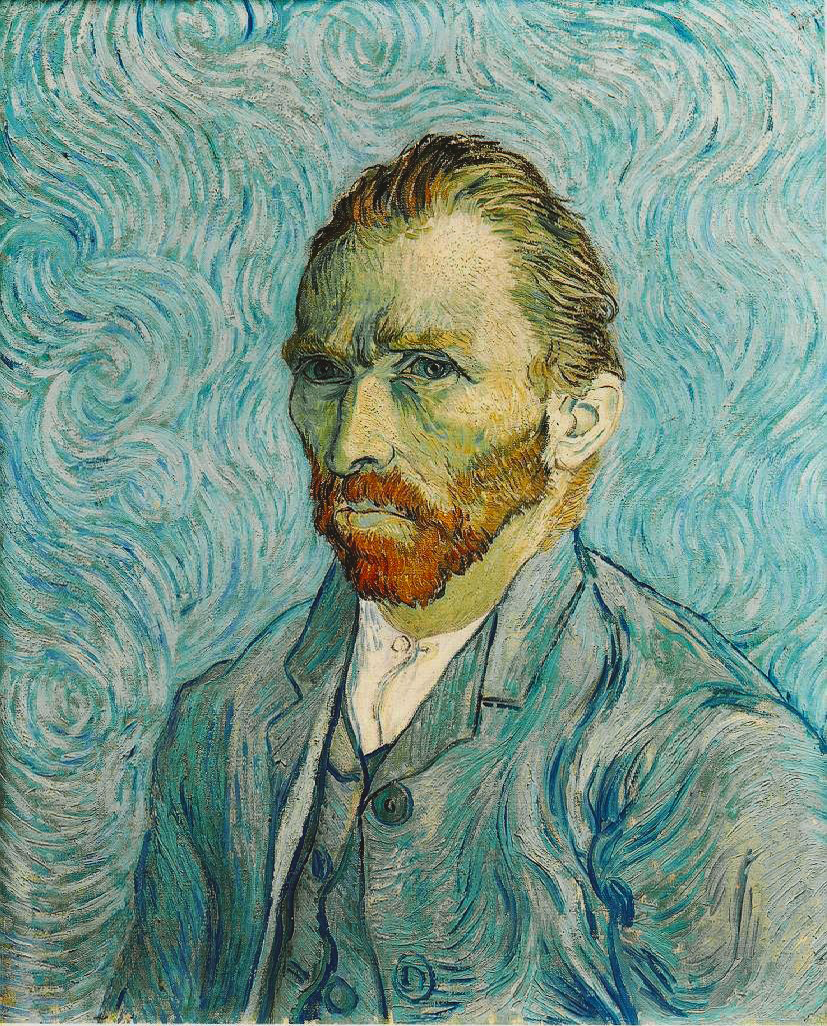
The color of the sky and the ocean, blue is one of the most popular colors. It causes the opposite reaction as red. Peaceful, tranquil blue causes the body to produce calming chemicals, so it is often used in bedrooms. Blue can also be cold and depressing. Fashion consultants recommend wearing blue to job interviews because it symbolizes loyalty. People are more productive in blue rooms. Studies show weightlifters are able to handle heavier weights in blue gyms.


Vincent Van Gogh
Self Portrait


Green

Currently the most popular decorating color, green symbolizes nature. It is the easiest color on the eye and can improve vision. It is a calming, refreshing color. People waiting to appear on TV sit in "green rooms" to relax. Hospitals often use green because it relaxes patients. Brides in the Middle Ages wore green to symbolize fertility. Dark green is masculine, conservative, and implies wealth. However, seamstresses often refuse to use green thread on the eve of a fashion show for fear it will bring bad luck.


Frida Kahlo
Self Portrait


Yellow

Cheerful sunny yellow is an attention getter. While it is considered an optimistic color, people lose their tempers more often in yellow rooms, and babies will cry more. It is the most difficult color for the eye to take in, so it can be overpowering if overused. Yellow enhances concentration, hence its use for legal pads. It also speeds metabolism.


Bellany
Self Portrait


Purple

The color of royalty, purple connotes luxury, wealth, and sophistication. It is also feminine and romantic. However, because it is rare in nature, purple can appear artificial.


Andy Warhol
Self Portrait
Fun Fact: This painting just sold for $32.5 billion dollars at Sotheby's!


Brown

Solid, reliable brown is the color of earth and is abundant in nature. Light brown implies genuineness while dark brown is similar to wood or leather. Brown can also be sad and wistful. Men are more apt to say brown is one of their favorite colors.


Raphael
Self Portrait


Food for Thought

While blue is one of the most popular colors it is one of the least appetizing. Blue food is rare in nature. Food researchers say that when humans searched for food, they learned to avoid toxic or spoiled objects, which were often blue, black, or purple. When food dyed blue is served to study subjects, they lose appetite.

Green, brown, and red are the most popular food colors. Red is often used in restaurant decorating schemes because it is an appetite stimulant.

by David Johnson


Miz Art Question

Art I Students: What colors are you going to use in your portrait, and why?

Computer Graphics & Art II, III & IV Students: How will the knowledge of the psychology of color change your artwork? How will use color symbolically?


Read more: Color Psychology — Infoplease.com http://www.infoplease.com/spot/colors1.html#ixzz10jwCDYBT

Miz Art # 2 for week of 10/4/10